
A point-of-sale system is one of the richest data sources a small business has. Every order records what sold, when, where, with what and at what price. Traditional POS systems store that data and produce reports that busy owners rarely read.
An AI POS uses the same data to make suggestions while the business is running. Here's where that makes a real difference, based on what we've learned building AIPOS, our AI point of sale for restaurants and cafés.
1. Prep and staffing: forecasting that knows local patterns
Over-prepping wastes food. Under-prepping loses sales and annoys customers. A forecast by item, outlet and hour turns gut feel into a prep list.
The important word is local. Malaysian trade has patterns a generic tool won't know about: Ramadan and the shift to buka puasa hours, school holidays, festive seasons, payday weekends and sudden afternoon storms. A model trained on local trading data captures these patterns. It then fine-tunes on each outlet's own history.
2. Restock: ordering before you run out
Combine the sales forecast with current stock and supplier lead times, and the POS can propose a purchase order. It also works in the other direction, flagging slow movers before they expire or tie up cash.
3. Upsell: a better suggestion than "would you like fries?"
Recommendations at checkout are the most visible AI feature. A good engine looks at what's already in the order, the time of day, what similar customers added and what's in stock, then suggests one relevant add-on. When it works, staff don't need a script and the suggestion feels like good service.
Keep upsell suggestions few and relevant. One good suggestion beats three generic ones every time.
4. The kitchen pass: serving the table together
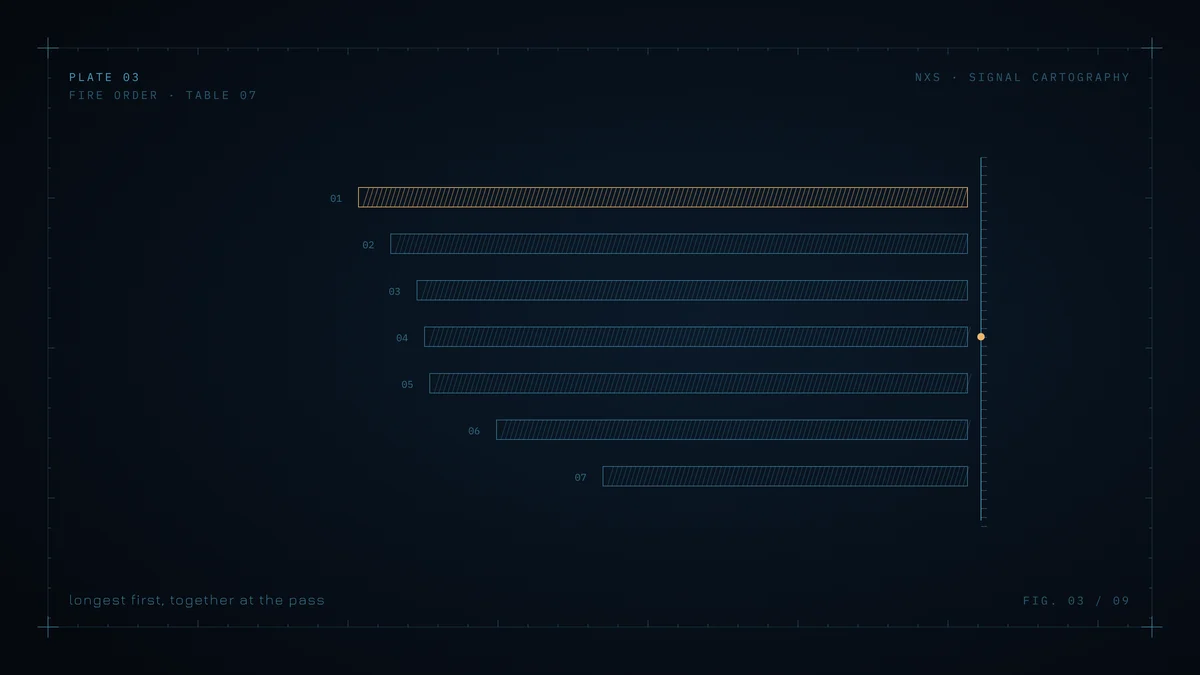
A table of four orders mee goreng, nasi lemak, roti canai and two teh tarik. If the kitchen fires them in the order they were keyed in, the roti arrives first and the mee goreng last. In AIPOS, the kitchen ticket is sequenced by AI so the longest cook goes first and the whole table is served together. Diners notice the difference, even if they never see the ticket.
5. Bringing regulars back
The POS knows who your regulars are and what they order. AI can turn that into suggestions for a loyalty offer, a menu tailored to the customer on mobile ordering, or an SMS campaign. In AIPOS, the back-office assistant proposes the audience, the message and the best send time, and the owner decides whether to send it.
Where AI doesn't help (yet)
- Brand-new outlets have no history. Forecasts lean on similar outlets until local data builds up over a few weeks.
- One-off events like a nearby concert can't be predicted from sales history alone. Managers can add them as known events.
- Messy menus with hundreds of near-duplicate items weaken every model. Tidy item data pays off quickly.
What to ask any AI POS vendor
- What data are the models trained on, and is it relevant to my market?
- Is my data kept separate from other merchants', and how is it used?
- Can I see why the system made a recommendation?
- Does it handle the basics well (speed, payments, e-invoicing readiness, offline mode)? AI doesn't make up for a slow checkout.
See AIPOS for your outlet.
AIPOS packages for F&B start from RM990 a year. Compare the packages on aipos.asia, or book an AIPOS demo →